Let's talk about what happens after the first one
You've just had an orgasm. Your body feels loose, your breathing is settling, and there's this moment of genuine peace. Then you think: could I do that again right now? And the answer, weirdly, isn't a clean yes or no. It's complicated in ways that nobody really explains until you're already in it.
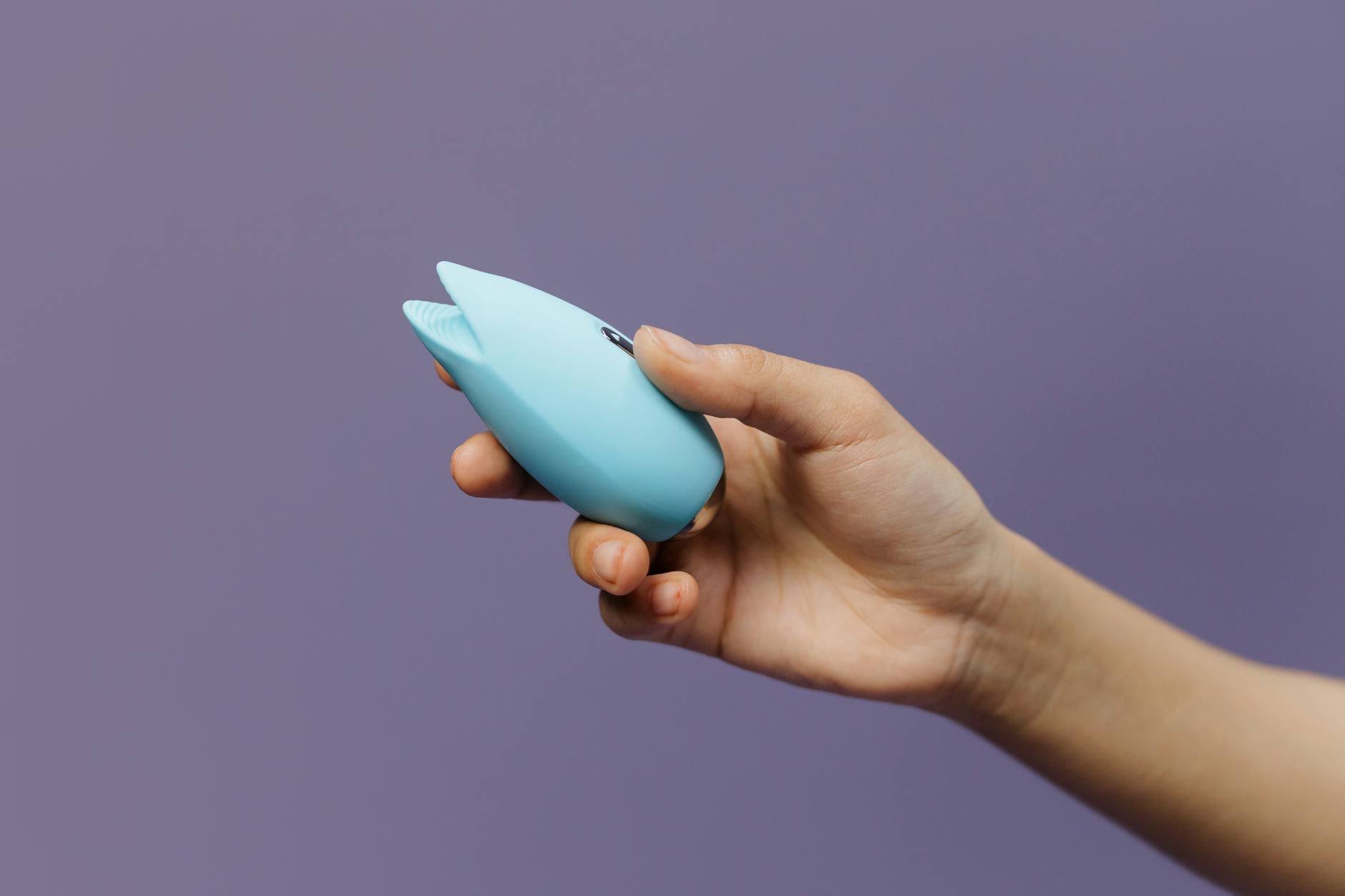
That complicated space is your refractory period. And here's the thing nobody tells you: it's not a brick wall. It's more like a dimmer switch. Understanding how to work with it using a tool like a lemon vibrator can completely change what's possible in a single session.
What your refractory period actually is
After orgasm, your nervous system shifts. The parasympathetic nervous system (your rest-and-digest mode) takes over from the sympathetic nervous system (your go-go mode). Your genital tissue becomes temporarily desensitized to direct stimulation. Your heart rate and blood pressure come down. Your brain floods with prolactin, the hormone that signals satisfaction and, for some people, a temporary loss of interest in more stimulation.
This period lasts anywhere from two minutes to two hours depending on your body, your cycle, your stress levels, and your age. It's not a flaw. It's a built-in recovery mechanism. But it's also negotiable.
The difference between refractory and unresponsive
Here's the critical distinction: during your refractory period, you're not incapable of sensation. You're just less responsive to the type of stimulation that got you there the first time.
Direct, intense clitoral pressure might feel like too much. But broader, gentler, or differently-patterned stimulation often registers beautifully. Your body is recalibrating, not shutting down. A lemon clitoral vibrator using its air-suction technology can work exceptionally well here because it distributes pressure differently than a traditional vibrator. The suction creates a gentler envelope of sensation rather than direct percussion, which many people find easier to receive post-orgasm.
The three-minute reset window
If you want to extend pleasure without pushing against discomfort, the sweet spot is usually around three to five minutes after your first orgasm. Your nervous system has started to settle, but your arousal circuitry hasn't completely powered down.
During this window, try these approaches:
Lower the intensity. If your lemon vibrator has pattern options or intensity levels, drop down two or three notches from what brought you to orgasm. You're not trying to build the same peak. You're exploring what's interesting at this lower amplitude.
Change the location slightly. Instead of the same pressure point, shift the toy to the surrounding tissue, the mons pubis, or the inner labia. The clitoral complex extends way beyond the visible glans. Using a lemon sucker in a slightly different position often feels revelatory because you're engaging nerve clusters that haven't been recently overloaded.
Introduce rhythm variation. If you used steady pattern during orgasm, try the intermittent patterns now. The unexpected shifts can actually reset your nervous system's adaptation and make sensation feel fresh again.
Building toward a second peak
Here's where understanding your refractory period becomes genuinely game-changing: multiple orgasms aren't about collapsing one peak into another. They're about using the refractory period to build a different kind of intensity.
Instead of trying to rush back to max arousal, spend five to ten minutes in the refractory space exploring milder sensations with your lemon vibrator. Let your arousal rebuild gradually. You'll notice something interesting happens around the 7-minute mark: your body starts to respond more actively again. Your breathing picks up. You feel a new kind of tension building, and it's distinct from the first one.
This second peak is often described as feeling different. Less urgent. More expansive. Sometimes stronger. This is partly because you're approaching it from a different physiological state. Your nervous system has settled enough that you can access different nerve pathways and different types of sensation.
Many people with vulvas find that their strongest orgasms come on the second or third round, specifically because they've learned to work with the refractory period rather than against it.
Why lemon vibrators work particularly well here
Traditional vibrators with steady vibration can feel overwhelming during your refractory period. The directness of the stimulation doesn't match where your nervous system is at that moment. You might feel numb or irritated. Increasing power doesn't help. It's just more of a sensation that's already too much.
A lemon clitoral vibrator using air-suction technology works differently. The suction creates a broader, gentler sensation that distributes pressure across a wider area rather than concentrating it on one nerve cluster. This matches your refractory-period nervous system better. You get sensation without that overwhelming intensity. The pattern variations also help because your brain stops adapting when the stimulus keeps changing.
Pacing tricks that actually work
If you want to extend a session and explore multiple rounds, rhythm is everything. Here's what I see work most consistently:
The pulse approach. Use your lemon vibrator for two to three minutes, then rest for one minute with no stimulation. During the rest minute, you can use your fingers or your partner's touch to keep arousal simmering without direct clitoral pressure. Then resume the vibrator at a different intensity or pattern. This cycling teaches your body that arousal isn't a single dramatic climb. It's a series of waves.
The pattern layering method. If your vibrator has multiple patterns, spend a few minutes on each one sequentially instead of staying on the pattern that gave you your first orgasm. You're essentially retooling your nervous system's response by changing what it's adapting to. By the time you circle back to the original pattern, your body is fresh and responsive to it again.
The partner variation. If you're with someone, switching between toy stimulation and partner touch during your refractory window helps tremendously. The change in sensation and the psychological element of intimacy often jumpstart arousal faster than solo continuation with the same toy.
When to stop and when to keep going
Not every refractory period is the same. Some days your body bounces back immediately. Other days, usually when you're stressed or exhausted, three minutes feels like three hours. Your job is to listen, not push.
If after five minutes with lower-intensity stimulation you're still feeling irritated or numb, stop. Your refractory period is longer that day. That's normal. Continuing is just frustration. You've already had an orgasm. That's a win.
If, after five minutes, you feel your arousal beginning to rebuild and the sensation feels good, keep going. You're not pushing against biology. You're working with it. This is when a tool like a lemon sucker becomes genuinely useful because you can stay engaged without the intensity that would overwhelm a freshly-sensitized nervous system.
The mental piece matters as much as the physical
Here's something I notice consistently in couples work: the refractory period is where performance pressure sneaks in hardest. After one orgasm, the question becomes: should I have another? Can I? Am I taking too long? This narrative, not the actual physiology, is what kills the possibility of a second peak.
If you're solo, the pressure is different but it's there. You might feel like you're being inefficient if you take ten minutes between rounds instead of two. Here's the truth: working with your refractory period is not inefficiency. It's how your body actually works. The pleasure compounds when you accept this rather than fight it.
With a partner, the most useful conversation is a quiet one. "I'm in the refractory window. This intensity feels too much. Can we just keep exploring at a lower level?" Your partner understanding that you're not done, just recalibrating, changes everything.
Common misconceptions about refractory periods
"If I'm not aroused, I should stop." FALSE. Arousal isn't binary. You can be in a lower state of arousal and still be exploring pleasure. These are different things.
"It gets shorter the more I practice." SOMETIMES, but not reliably. Your refractory period is influenced by cycle phase, stress, sleep, and dozens of other factors. You might find patterns, but assuming it will always get shorter is a setup for frustration.
"Men have refractory periods and women don't." OUTDATED. Lots of people with vulvas have very short refractory periods. Some have long ones. The science shows way more variation than the stereotype suggests.
Frequently asked questions
What's the difference between refractory period and not being able to orgasm again?
A refractory period is a temporary recalibration. You're capable of arousal and orgasm, but your body is in a phase where it's less responsive to direct stimulation. If you've never been able to have multiple orgasms in a session, that's different. It might be physiological, or it might be that you haven't found the right approach yet. A tool like a lemon vibrator at lower intensity during your refractory window is exactly what many people need to discover that capacity.
Can I shorten my refractory period?
Some factors help slightly. Better sleep, lower stress, and staying hydrated all support faster arousal recovery. But your baseline refractory period is partly genetics. You can work with it more effectively, but you can't shrink it dramatically. The goal isn't to eliminate it. It's to use it productively.
Is it normal for my refractory period to feel different month to month?
Completely normal. Hormonal cycle, stress, medication, sleep quality, and overall health all affect how quickly your nervous system rebounds. What works during one week of your cycle might feel completely different the next week. Track what you notice. It's genuinely useful data.
Should I use the same lemon clitoral vibrator pattern during my refractory period?
No. Switching patterns is your best tool during the refractory window. Your nervous system adapts to patterns quickly, which is why staying on the same pattern during recovery often feels like diminishing returns. Use a different setting. Lower intensity. Different location. The variation itself is restorative.
How do I know if my refractory period is too long?
If you want to have multiple orgasms in a session and you're consistently waiting more than 20 to 30 minutes, it's worth a conversation with a doctor. That's longer than average, though still completely normal. There might be underlying factors like medication side effects or hormonal patterns worth exploring.
Can my partner help me navigate my refractory period?
Absolutely. The most useful thing a partner can do is stop trying to maintain peak arousal during that window. Instead, shift to gentler touch, intimate conversation, or switching to a lemon vibrator at lower intensity. Refractory period is where couples often get stuck because they assume something's wrong. Nothing's wrong. You're just in a different phase of the pleasure arc.
The takeaway
Your refractory period isn't a limit. It's a transition. Understanding how to work with it instead of against it opens up a genuinely different kind of pleasure exploration. A lemon clitoral vibrator with variable intensity and patterns gives you precise tools to stay engaged during that window in ways that feel good rather than frustrating.
The next time you finish your first orgasm, instead of assuming you're done, try dropping the intensity and changing the pattern. Explore the lower-arousal sensations available to you. Give your nervous system five to ten minutes to recalibrate. You might be surprised at what you discover.
If you want to dig deeper into how different tools can support pleasure exploration, the guide to lemon vibrators and better orgasms after 40 has more strategies for working with your nervous system across the lifespan. And if you're with a partner navigating these rhythms together, best lemon vibrator settings for couples pleasure has concrete approaches for communication and timing.
Your body knows what it's doing. You just needed the language to understand it.